What is Mastering or Mastering
Whats Masteringo Mastering
Today’s definition of Masteringo Mastering
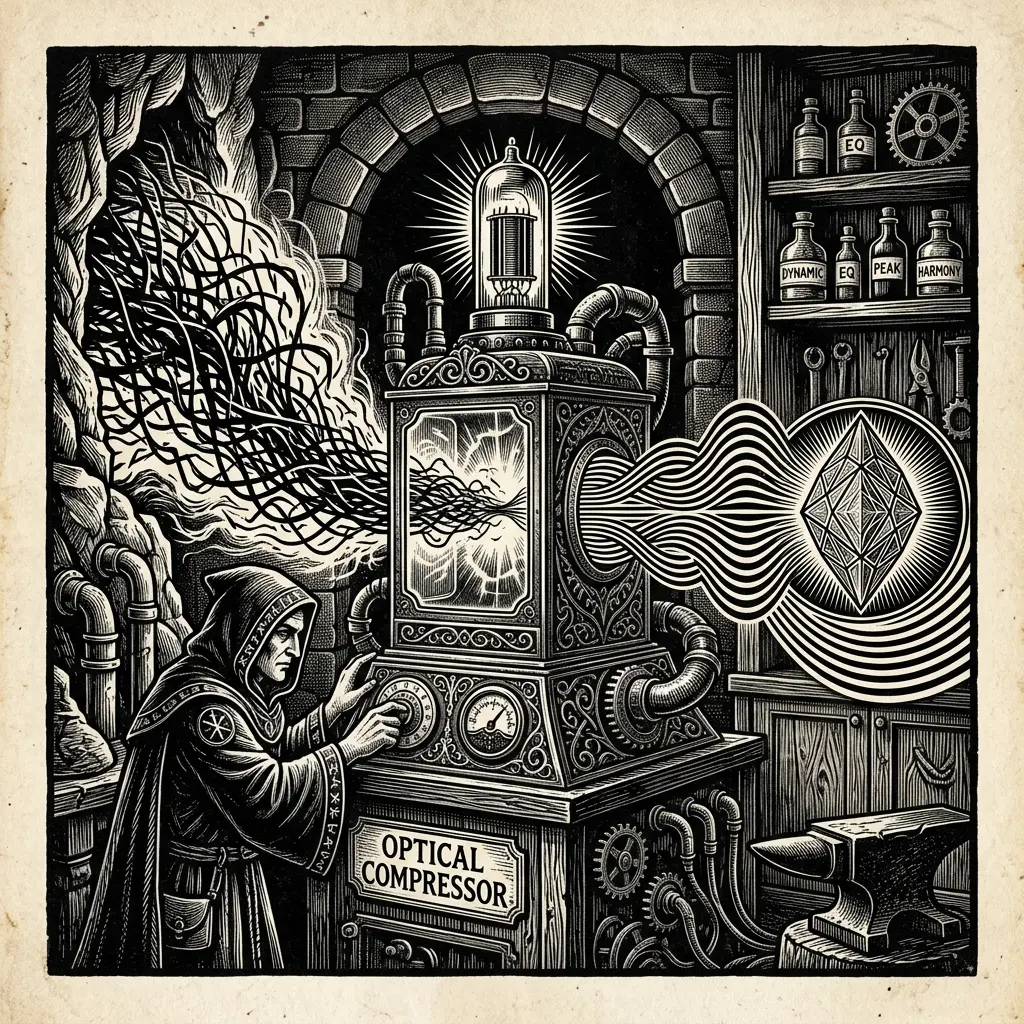
Mastering Mastering is more than the last step of a musical production; it is the sonorous alchemy that transforms your creation into a masterpiece. After composing, recording, producing and mixing, we arrive at the crucial mastering process, where sound is enhanced in multiple dimensions.
Seeing mastering as the final touch on a photograph: adjusting the lighting, intensifying colors and clarifying the image. Thus, in mastering, we bring music to life, ensuring that each note shines with clarity and purpose.
**Important!**A good mix is essential for an effective process. A low-quality mix will limit the results of mastering, highlighting errors rather than perfections. The foundation of exceptional mastering lies in high-quality music production, single-wire recording, ingenious musical arrangements, and, of course, the skill of expert musicians and technicians.
Mastering Mastering is more than the last step of a musical production; it is the sonorous alchemy that transforms your creation into a masterpiece. After composing, recording, producing and mixing, we arrive at the crucial mastering process, where sound is enhanced in multiple dimensions.
Seeing mastering as the final touch on a photograph: adjusting the lighting, intensifying colors and clarifying the image. Thus, in mastering, we bring music to life, ensuring that each note shines with clarity and purpose.
**Important!**A good mix is essential for an effective process. A low-quality mix will limit the results of mastering, highlighting errors rather than perfections. The foundation of exceptional mastering lies in high-quality music production, single-wire recording, ingenious musical arrangements, and, of course, the skill of expert musicians and technicians.
📸 Fotograma Específico de Referencia (Fotograma 1)
Fuente y Atribución: Captura de pantalla técnica extraída en el minuto exacto del tutorial educativo por Laidback Luke / Pioneer DJ.

- Detalle Técnico: Demostración de cálculo armónico entre claves 8A y 9A sin choques tonales.
- Ver Vídeo Completo: Ver instante exacto en YouTube
Understanding the Difference: Mezclavs. Mastering
While mastering can serve as the final magic that polishes a production, mixing is about assembling each part into a coherent symphony. Think of mixing like building the foundation of a house. Each instrument and voice is driven with precision, ensuring that each has its space and function.
🎛️ Equipamiento Técnico & Cadena Analógica en Estudio (Imagen 2)

Estación de secuenciación dawless con AKAI MPC 1000 y sintetizadores analógicos en acción.
Mix
In mixing, it’s about balancing and adjusting levels, equalizing frequencies, and applying effects so that all musical elements come together harmoniously. It is the process that ensures that each track component is in place, similar to assembling the pieces of a puzzle.
Mastering
On the other hand, mastering not only improves the sound, but also ensures that your music sounds good on any platform or device. It’s like applying a coat of gloss to an already beautiful paint, ensuring maximum impact.
In short, although both processes use similar tools and techniques, their purpose and application are different. Mixing creates the structure, while mastering adds the perfect finish, elevating the work to its full potential.
First Days: The Mechanical Beginning of Mastering
before 1920
- Mechanical Era: Artists recorded directly on acoustic horns that recorded sound on discs or cylinders.
-Technical Limitations: Restricted sound quality and dynamic range.
The Electronic Revolution
1920s
-Introduction of Microphones and Amplifiers: Transition towards electro-mechanical mastering.
-Significant Improvements: Greater control over sound quality.
The Era of Magnetic Tape
1940s
-Innovation by Fritz Pfleumer:Development of magnetic tape.
-Advance Recording: Allowed sound manipulation and experimentation.
El Saltoalo Digital
End of the 20th century
-Digital Audio Workstations (DAWs):Completely transformed mastering.
-Precision and Flexibility: Detailed customization of the audio.
Claveenel Modern Mastering Techniques
Sequencing and Spacing
-Order Songs: End the flow of the album.
-It is pa ciated between Tracks:It affects the perception of what and in the album.
Equalization and Compression
-Frequency Balance: Fine adjustment for balanced sound.
- Dynamic Control: Level maintenance is consistent.
Limitation and ISRC Codes
-Volume Increase:Without incurring distortion.
-Identification Codes:Essential for rights management.
Key Data in the History of Mastering
Era Innovation Impact Mechanical Acoustic Horn Limited quality and dynamic range Electro-Mechanical Microphones and Amplifiers Greater sound control Magnetic Tape Tape Recording Flexibility and experimentation Digital DAWs and Software Precision and customization
This table summarizes the fundamental milestones in the evolution of mastering, highlighting the main technological eras and their significant innovations. Each row represents a different period in the history of mastering, from mechanical beginnings to the digital era. The Innovation column details the crucial technical advances of each era, while the Impact column describes how these changes have influenced and improved the quality and control of sound in music recording. This chronological perspective provides a clear view of how mastering has evolved to become an essential piece of modern music production.
The Continuous Transformation of Mastering
\Mastering has evolved from a mechanical process to a highly technical and creative one. From the early days of rudimentary recordings to today’s digital age, each advancement has expanded the frontiers of what is possible in music production. This timeline tells us not only the history of mastering but also the constant pursuit of perfection in recorded sound.
In 1948, with the arrival of magnetic tape recorders, the first true mastering engineers were born. This change allowed the creation of digital copy, revolutionizing the process that was previously limited to direct recordings on 10-inch vinyl.
Moving forward to 1957, the release of the stereo vinyl record prompted mastering engineers to implement techniques to increase the volume of recordings. This innovation not only improved the quality of radio playback, but also triggered the famous \volume war, a trend that persists to this day.
1982 brought with it the CD revolution, replacing vinyl mastering with more precise digital versions, although maintaining many analogue tools. This change laid the foundation for future developments in digital mastering.
Finally, in 1989, the introduction of the first DAW application with mastering software offered a revolutionary alternative to the traditional process, further expanding the creative and technical possibilities for mastering engineers.
Each of these milestones reflects not only technological evolution, but also the adaptation and creativity of engineers in their search for perfect sound.\
Fragrance Soundafirst-class engineerconversingaboutmastering
https://www.youtube.com/watch?v=k PQOlf_OW8E&t=4s
The goal of mastering is to ensure that your music sounds consistent and spectacular on any device, from small headphones to massive sound systems. We’re looking for that impressive sound quality that transcends the limits of loudspeakers.
After mastering, your audio should sound full, smooth, professional and balanced. This means you can share your work with confidence, whether on streaming platforms, digital downloads, or in physical formats such as vinyl.
With a good mastering process, music reaches a whole new dimension, ensuring that every note resonates clearly and every measure maintains its impact, no matter where it is heard.
The Purpose of Mastering
The goal of mastering is to ensure that your music sounds consistent and spectacular on any device, from small headphones to massive sound systems. We’re looking for that impressive sound quality that transcends the limits of loudspeakers.
Focusing on music, this article explores mastering for musical projects, leaving aside other media such as film and television.
Mastering in an analog studio using hardware
Essential Tools for Mastering
This guide provides a detailed understanding of the tools and processes involved in mastering, from the fundamentals to advanced techniques used by professionals. By implementing these practices, mastering engineers can transform a mix into a sonic work, ensuring that the music sounds optimal on any platform or device.
The mastering process employs a variety of tools and processors. Let’s delve into some of them to understand how each technique contributes to the final result.
Equalizers: Used to balance bass, mids and highs, adjusting and eliminating unwanted frequencies. A notable equalizer is the Elysia Museq, perfect for balancing frequencies in mastering. It is crucial to use linear phase equalizers to maintain sonic integrity. EQ is essential to correct any spectral imbalances and optimize the sound of the elements that should be highlighted in the mix.
Compression: This step controls the peaks and evens out the perceived volume, improving the “punch” or moderating it as necessary. Compression corrects and improves the dynamic range of the mix, giving better uniformity to the overall audio. It is a process that helps unite parts that may not be as cohesive as they should be.
Stereo Image: Stereo image processors adjust stereo width in different frequency bands, which is vital in mastering. This process helps to widen the mix and adjust the center image, focusing on the low end to improve the spatial balance of the audio.
Limitation:The final process in the master chain. We use limiters to increase the volume and intensity of the sound, a critical step for maximum impact. Limiting establishes a suitable overall loudness and creates a maximum level, ensuring that the song is loud enough without allowing distortion.
Extreme Frequency Treatment
- Low Frequencies: use of high-pass filters to clean up unnecessary noise and vibrations, ensuring that the audio is not saturated at the bottom end.
-High Frequencies: Gentle attenuation to avoid hearing fatigue and maintain clarity, similar to adjusting the fine points of a photograph.
Control Wheezing
-Technique: use of de-essers to reduce sibilant sounds in voices and other instruments.
-Objective: Achieve a cleaner and more natural vocal sound, maintaining audio quality.
Using Effects and Textures
-Review and Delay:Add space and depth to the mix, creating a richer listening experience.
-Excitators and Saturation: Enrich harmonics and add “warmth” to the recording, raising tonal richness.
Final Adjustments and Preparation for Duplication
-Normalization and Final Volume: Ensure that the mix reaches a standard volume level without distortion.
-Codes and Metadata: Include ISRC and other relevant data for distribution.
Finally, sequencing and spacing are crucial steps in ordering the audio on an album or EP, ensuring that the flow between tracks is perfect with proper spacing. These details ensure that the audio piece sounds flawless on any playback system.
Specific Considerations for Different Media
Mastering for Vinyl
-Unique Specifications:Special attention to low frequencies and side durations.
-Precautions: Avoid problems such as distortion and crossing grooves.
Mastering for CD and Digital Streaming
-Loudness War: Understanding the implications of loudness on digital and streaming platforms.
- Loudness Regulations: Comply with loudness standards, such as LUFS, to optimize hearing on different platforms.
Quality Control and Final Review
-Critical Listening: Review the mastering on different sound systems.
-Last Minute Adjustments: Corrections based on critical listening and feedback.
Elysia Museq is a highly recommended equalizer to adjust the frequency balance in Mastering. Equalizer provided by Plugin Alliance. For more such, visit Plugin Alliance.
Equalizers allow us to adjust the frequency balance by making boosts or decreases in specific frequency ranges. IMPORTANT: Use Linear Phase equalizers in mastering.
Compression in Mastering
With compression in the mastering process we control the peaks and achieve a tighter sound in terms of perceived volume. We can also accentuate the punch or even reduce it a little with the compressor.
Stereo Image in Mastering
Stereo image processors allow us to zoom in and out of the stereo information in the mix. Some processors such as ozone Imager allow you to work on separate frequency bands. Which is very useful in this type of process.
Ozone Image is a useful treatment tool. We can expand or reduce the stereo width by 4 separate bands. Image courtesy of Zotope Ozone. For more information about the plugin, visit Zotope Ozone.
Limitation of the Master
Limitation is the final process in the master chain. Either with one ovary imitators. With this processor we will achieve a volume that sounds loud and we will achieve greater intensity in the sound. It is one of the most important mastering processes in our opinion.
For more detailed information about the processes in mastering, read our post on THE MASTERING CHAIN
Sound is the bridge between chaos and harmony. Use the hardware to your advantage.—Ander B
Do you want your next track to sound in the big leagues? More than 500 tracks produced at MPCEstudio BCN. Book an online or in-person session at our studio in L’Hospitalety and elevate your Sound to the mainstream standard.
🚀Take your Sound to the Next Level
Are you looking for a professional sound, analog mix or exclusive instrumentals? At MPCEstudio Barcelona we work with the best hardware in the industry so that your music competes in the big leagues.
👉Contact us via Whats App to book your session or request a custom pr es up or this.
📸 Demostración Práctica en Pantalla (Fotograma 3)

Captura de Referencia: Explicación técnica de procesado extraída del canal de autoridad Waves Audio / Pensado’s Place. Calibración del medidor de sonoridad para sesiones de club y streaming.
READY TO ELEVATE YOUR TRACKS TO THE NEXT LEVEL?
Don't let your talent get lost in bedroom-quality demos. Work 1-on-1 with Ander B at our Barcelona studio (Neve 1073, SSL, AKAI MPC) or train at our exclusive analog academy.